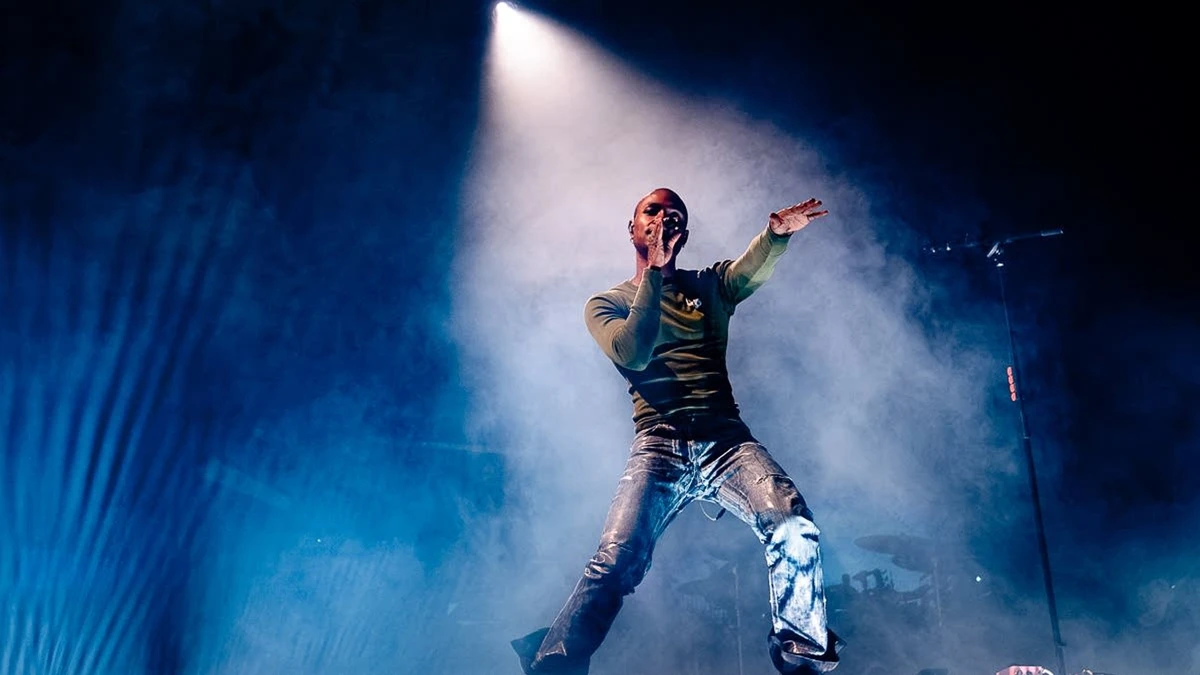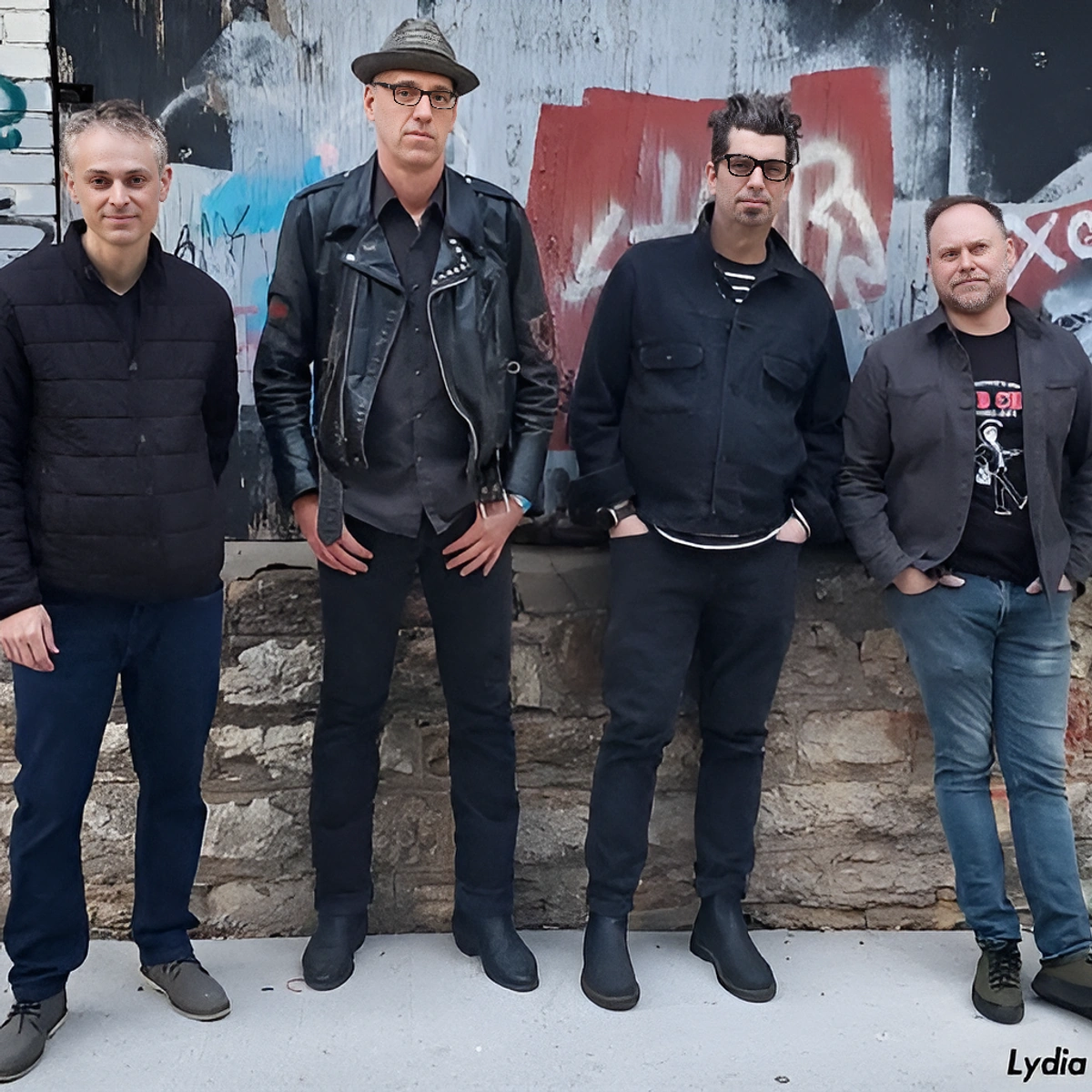
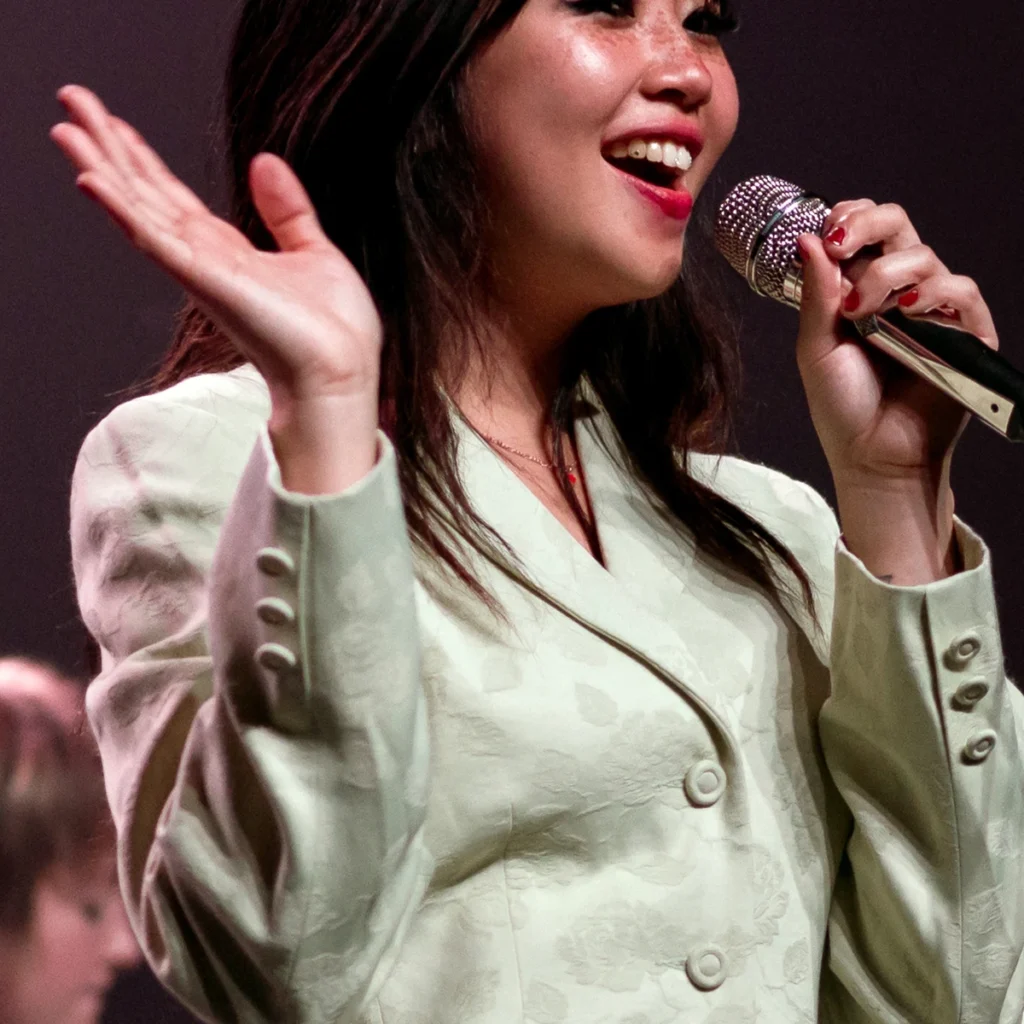
Beabadoobee on stage. Her fourth Pylon single lands three weeks before a secret-venue London show.
Beabadoobee has spent this album cycle refusing to sit still. “Memories,” out since Thursday, is the fourth piece of new music she has put out ahead of Pylon, and it is the first one that sounds unambiguously joyful. Then she explains what it is about, and the joy turns out to be the trap.
Beatrice Laus describes it as “one of the happiest songs on the album.” She also describes it as a song about the danger of getting locked into a nostalgia spiral, “clinging onto ideas that should make me happy but actually make me feel sad, because I wish they were just moments I lived in forever.”
A Bright Song Carrying a Heavy Admission
Musically, “Memories” moves. Stereogum called it a dreamy rocker that keeps a brisk momentum despite layering on considerable prettiness, which is a fair description of a track that could easily have been slowed into a ballad and was not.
The lyric works in fragments rather than statements. “The smell of rain on the pavement,” she sings, and then, “It’s 3 a.m. and I thought of you.” The plea that follows, “Just stay a little while,” is the whole song compressed into four words: not a memory being enjoyed, but a memory being asked to hold on longer than it should.
That gap between how a song feels and what it admits is a recognisable move for her. It is also why the writing has aged better than the bedroom-pop label that followed her early releases around.
DIY put it well, describing the song as catching her in an unsettling limbo between nostalgia and regret. The distinction matters: this is not a song about missing something, it is a song about romanticising the past until it starts damaging the present.
Four Singles, Four Different Rooms
The run-up to Pylon has been deliberately varied. It opened with “All I Did Was Dream Of You,” a swooning non-album teaser that set a mood without committing to a sound. Then came “Sun Has Set,” a raucous pop-rocker, and “Switchblade,” a sumptuous trip-hop slow jam that sat about as far from it as the same artist could reasonably go.
“Memories” lands in the middle: rock momentum, dream-pop texture, pop clarity. Taken together the four suggest a record that is not trying to establish one signature sound, which is a confident bet for an artist at this stage rather than a cautious one.
It also makes the album harder to pre-judge, which may be the point. Nobody who has heard all four singles can currently tell you what Pylon sounds like.
What is known is how it was made, and that detail reframes the singles. Pylon was written largely in solitude, in hotel rooms on the road, a process she has described as returning her to the way she wrote as a teenager: alone in a bedroom, sitting in the low mood rather than writing around it. An album assembled that way tends to be tonally consistent underneath even when the arrangements scatter, which may be exactly what is happening across these four songs.
DIY called the result a marked expansion for her, and the word is well chosen. Expansion is not the same as reinvention. The songs are still built the way her early ones were, from a single voice working something out; what has grown is the space around them.
The Levelling-Up Nobody Should Have Missed
Beabadoobee was already a substantial live draw before this cycle. She would not be playing arenas and amphitheatres otherwise, and the audience she built through the 2020s has followed her across every stylistic left turn she has taken.
What the Pylon singles suggest is a further step up in ambition rather than reach. The arrangements are denser, the production choices are less cautious, and the songs are being sequenced across genres rather than within one. For a discovery-minded listener, this is the interesting stage of an artist’s career: big enough to fund the ideas, not yet locked into repeating the one that worked.
Pylon arrives on 18 September through Dirty Hit and Interscope.
The Dirty Hit roster she sits on has spent a decade turning British guitar-adjacent acts into arena bookings, and her own dates bear that out: Utilita Arena in Cardiff on 16 November, AO Arena in Manchester the night after. Those are rooms that do not get booked speculatively.
A Secret London Venue the Night Before
The most intriguing date in the calendar is the one nobody can book properly. Beabadoobee has been announced as part of Spotify’s Hometown concert series, and will play a London show at an undisclosed venue on 17 September, the night before Pylon is released.
The staging is smart. A secret-venue hometown show turns a release date into a two-day event, gives the fanbase a reason to organise itself online, and generates the kind of footage that circulates far beyond the room. Compared with a conventional album-launch livestream, it costs less and travels further.
For anyone in London that week, it is also the only chance to hear these songs before the rest of the world does. Small-room shows from artists who have outgrown small rooms are the most reliably oversubscribed events in music, and this one has a deadline attached.
The booking says more about her standing than her size. Streaming platforms hand these slots to artists whose audiences will actually mobilise for them, not simply to whoever has the highest monthly listener count. A secret show only works if enough people care enough to chase an address, and she is being trusted to deliver that on a Thursday night in September.
Where Beabadoobee Fits Right Now
There is a version of this career that stalled in 2021, when the bedroom-pop wave that carried her broke and a lot of her peers went quiet. Instead she kept moving between guitar music, trip-hop and straight pop, and kept the audience through each move.
That is rarer than it sounds. Most artists who break out on a specific sound spend the following decade defending it. She has treated each record as a chance to be somewhere else, which is why a fourth single that sounds nothing like the third reads as normal rather than as a crisis.
The discovery angle here is not that she is new. It is that an artist this established is still genuinely unpredictable, in the way the breakout acts arriving through streaming and short-form video are supposed to be and often are not.
What to Listen For on Pylon
Going in, four things are worth tracking. First, whether the record resolves the nostalgia spiral she describes or simply sits inside it, because “Memories” makes no attempt to escape. Second, how the trip-hop instinct of “Switchblade” sits alongside the rock songs, given how differently the two are recorded. Third, whether the album’s happiest-sounding songs keep turning out to be the saddest ones.
Fourth, whether the hotel-room writing survives a full band and a major-label budget. The risk in that process is a record that sounds bigger than the songs underneath it; the reward is an album that keeps the intimacy of a demo while filling an arena.
On the evidence of four singles, the happiest-sounding one being the saddest is not a coincidence. It is the method.
This article was AI-assisted and edited for accuracy.
About The Author