
Ivorian Architect Builds Wordless Stories From Jazz, Soul and African Harmony
No vocal enters, and none is missing. J-BAB released Uncle Georges (Instrumental) on 13 July 2026, and the track hands the whole telling job to the arrangement. Free jazz phrasing sits next to a soul undertow, with African harmony in the middle. The Ivorian composer calls work like this a cartography of sounds.
J-BAB is in the playlist below, and each piece this network has published on the artist is listed at the artist profile. Uncle Georges (Instrumental) reached this desk through PopHits.Co Music Charts, the programme that verifies independent artists and places their releases across its network of music news titles. Give it a spin and stay with what follows.

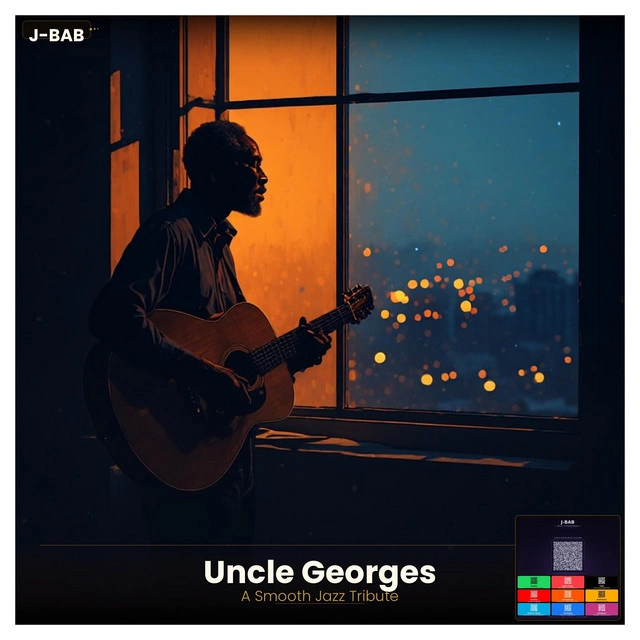
J-BAB Lets the Arrangement Carry the Whole Story on Uncle Georges
Instrumental music asks more of a writer than a song with a lyric does. There is no chorus to lean on. There is no line to repeat. Consequently every job a voice normally handles has to move somewhere else, into the harmony, the rhythm, or the handover between sections.
That is the discipline J-BAB works inside. He built the piece around structure rather than hooks, and he has been open about why. The aim, as he describes it, was coherence, balance and depth. In practice the interest sits in how the parts relate, not in one moment engineered to grab you.
“I see each track as a journey, a cartography of sounds,” said J-BAB. “With ‘Uncle Georges (Instrumental),’ I wanted to invite listeners to explore a new path, focusing purely on the narrative that instruments can tell. It’s about coherence, balance, and depth, allowing the structure to speak for itself.”

Abidjan Roots Meet Free Jazz, Soul and Hip Hop in One Frame
J-BAB was born and raised in Côte d’Ivoire. The influences he names read like a map of the last century. Jazz comes first, and he is specific about what he values in it: the freedom of improvisation, and the ability to hold a conversation without words. Soul follows, which he describes plainly as the music of the heart. Then hip hop and R&B arrive, tied to his adolescence and its energy.
Two more sit outside the usual list. He points to Asian music for its serenity and its discipline, a search for balance rather than display. He also points to easy listening, where an apparent simplicity hides real sophistication. Those two admissions explain how his instrumentals behave. They rarely rush, and they rarely shout.
Put all of it through African harmony and you reach the thing he actually makes. It is jazz-literate without being a jazz record. It is rhythmically African without being a world-music postcard. Above all, it stays warm in the way soul music is warm.
Three Reference Points That Place This Ivorian Instrumental in Context
Comparisons help, so here are three. Manu Dibango is the most direct. The Cameroonian saxophonist spent a career proving that African rhythm and jazz horn writing belong in the same bar, and “Soul Makossa” remains the clearest demonstration. J-BAB works the same seam at a lower temperature.
Alice Coltrane covers the free end. Her modal, harp-led records treated jazz as open space rather than a chord chart to negotiate, which is exactly the permission a piece like this one needs. Finally, Madlib anchors the instrumental-producer angle. His beat records are built from jazz and soul source material, and they prove an instrumental can hold a full listen without a sung line.
If those three sit anywhere in your collection, this release is aimed at you. It also suits listeners who hunt for independent artists deliberately, rather than waiting for an algorithm to hand something over.

An Architect’s Approach to Music Built on Coherence, Balance and Depth
J-BAB describes himself as a music architect, and the word choice matters. An architect is not trying to be the most visible object in the room. Instead, the goal is that the parts hold together and the whole thing stands up.
GetMusic.News curator team: “The reason Uncle Georges (Instrumental) earned a slot in our rotation is patience. Most instrumental tracks that reach us are built to loop behind something else. This one assumes you are listening to it, and it rewards that assumption on the second and third pass.”
There is another side worth noting. He teaches, quietly passing what he knows to emerging musicians, because he treats music as a river that should not stop. That belief in continuity is audible in how the track is assembled. Nothing is discarded for effect, and every element earns its place.
Where to Hear Uncle Georges (Instrumental) and Follow J-BAB Online
Uncle Georges (Instrumental) is out now, and the release plays in full in the player above. For the wider catalogue, follow the artist on Spotify, where each new entry in the sound map lands first.
Alongside the music, he posts on Instagram and Facebook. A YouTube channel runs beside both. Because he is an independent artist building an audience release by release, a follow on any of those does real work.




















About The Author